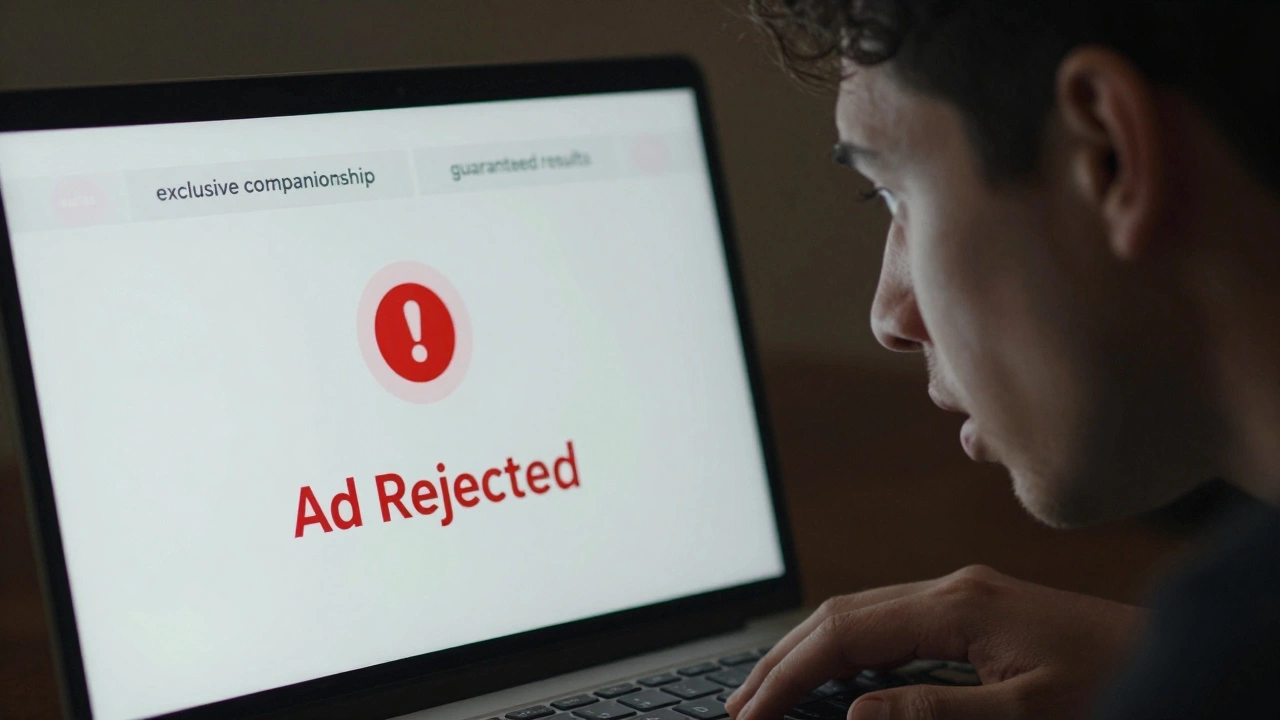
Nothing kills momentum faster than seeing your ad vanish without warning. You spent hours designing it, targeting the right audience, and hitting publish-only to get a notification that says, "Your ad has been removed." No explanation. No second chance. Just gone. If you’ve been there, you’re not alone. Thousands of advertisers face this every week, and most have no idea why. The truth? Most ad deletions aren’t random. They’re the result of tiny mistakes that platforms catch automatically-and often, they’re easy to fix.
Some people turn to services like escortes paris 12 for niche marketing, but even those campaigns can get pulled if they violate platform rules around adult content or misleading imagery. It’s not about the service-it’s about how it’s presented. Platforms like Meta, Google, and TikTok have strict guidelines, and they don’t care if you think your ad is harmless. If it triggers their filters, it gets deleted.
What Causes Ads to Get Deleted?
Ad platforms use automated systems to scan content in seconds. These systems aren’t perfect, but they’re trained on millions of past violations. The most common reasons your ad got deleted fall into five buckets.
- Prohibited content - This includes anything related to adult services, gambling, weapons, or illegal drugs. Even implied content-like suggestive photos or euphemisms-can trigger removal. An ad saying "exclusive companionship" might sound innocent to you, but platforms flag it as a coded reference to escort services. That’s why you’ll see ads for esvort girl paris vanish even if the page itself doesn’t mention anything explicit.
- Misleading claims - Phrases like "guaranteed results," "100% effective," or "last chance" are red flags. If your ad promises something impossible, it gets flagged. Even if you believe it, the system doesn’t care.
- Low-quality visuals - Blurry images, stock photos that look fake, or text-heavy graphics (over 20% text on the image) are automatic rejects. Facebook, for example, uses AI to detect how much text is in your image. If it sees too many words, it kills the ad.
- Targeting issues - Targeting minors, using sensitive demographics like race or religion, or targeting users based on health conditions (like depression or addiction) will get you banned fast.
- Policy violations in the landing page - Your ad might be clean, but if the page it links to has pop-ups, fake testimonials, or hidden fees, the whole campaign gets pulled. Platforms check the destination, not just the ad.
How to Find Out Why Yours Was Deleted
Most platforms give you a reason, but it’s often buried. Here’s where to look:
- Check your ad manager dashboard. Look for a yellow warning icon or a red "Rejected" label.
- Click on the ad. A pop-up should appear with the exact policy it violated. It might say something like "Violates policy on sexually suggestive content" or "Misleading claims about outcomes."
- If you don’t see a reason, check your email. Platforms send detailed notices to the email tied to your ad account.
- If all else fails, contact support. Be specific: "My ad ID 12345 was removed on December 5. I need the exact policy violation.
Don’t guess. If you don’t know the reason, you’ll just make the same mistake again.

What to Do After Your Ad Is Deleted
Don’t panic. Don’t re-upload the same ad. Don’t complain on social media. Do this instead:
- Read the policy violation - Copy the exact wording. Google it. Most platforms have public policy pages that explain what they mean.
- Fix the issue - If it’s a text-heavy image, redesign it. If it’s a misleading claim, rewrite the headline. If it’s a landing page problem, clean up the site.
- Submit an appeal - Most platforms let you appeal. Use the exact language from the policy to explain how you fixed it. Example: "I removed the phrase 'guaranteed results' and replaced it with 'many users report improved outcomes.'"
- Wait 24-72 hours - Appeals take time. Don’t resubmit multiple times. That triggers a penalty.
One advertiser I know kept getting rejected for an ad promoting eacorts in paris. They thought it was about travel. The platform thought it was about prostitution. They changed the visuals to show Paris landmarks, removed all suggestive language, and added a clear disclaimer: "This is a guided tour service." Their ad was approved within 48 hours.
How to Avoid This Next Time
Prevention beats cleanup every time. Here’s how to build ads that survive the review process:
- Use plain language - Avoid slang, metaphors, or coded terms. Say "massage therapy" instead of "relaxation experience." Say "professional companion" instead of "escort."
- Test your ad first - Run it as a small, low-budget campaign. If it gets flagged, you’ll know before spending big.
- Check the landing page - Open it in an incognito window. Does it look trustworthy? Is the contact info real? Is there a privacy policy? If not, fix it.
- Use platform tools - Meta has an Ad Policy Checker. Google has the Policy Manager. Use them before you launch.
- Keep records - Save screenshots of your ad, the landing page, and the approval notice. If you get rejected again, you’ll have proof you fixed it.

When All Else Fails: Switch Platforms
Not every platform is the same. What gets banned on Meta might fly on TikTok or Pinterest. If you’re consistently getting rejected on one platform, try another.
For example, if you’re promoting a service like esvort girl paris and Meta keeps deleting your ads, TikTok might allow it if you frame it as "local experience guides" with no suggestive imagery. YouTube Shorts sometimes works better than Facebook for niche services because their moderation is less aggressive.
But don’t just switch blindly. Each platform has its own rules. Read them. Test small. Adapt.
Final Tip: Don’t Take It Personally
Ad platforms aren’t targeting you. They’re protecting millions of users from scams, misleading claims, and harmful content. Their systems are designed to be broad, not precise. A mistake you made doesn’t mean you’re a bad advertiser-it means you’re human.
The goal isn’t to trick the system. It’s to work with it. Build ads that are clear, honest, and simple. If you do that, your ads won’t just survive-they’ll perform better.